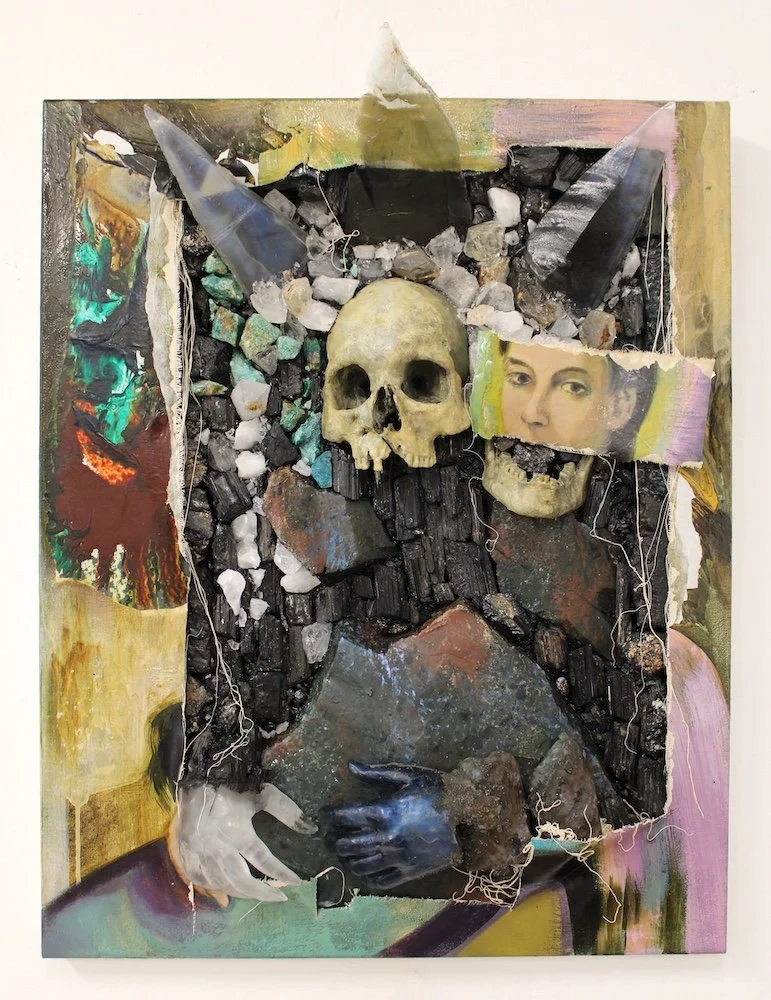
The canvas is ruptured to expose an interior of geological material, fragmented portraiture, and a human skull. Stone occupies the work as an objective presence. It exists outside of interpretation, while the surrounding imagery reflects the cultural systems through which meaning, history, and value are constructed.
The title deliberately names something absent. Rather than referring to representation, it points toward an external reality that persists independently of aesthetic judgment, political consensus, or institutional authority.
An orange tree exists regardless of language, institutions, markets, or belief. Against this proposition, the work questions whether something like artistic value is an inherent quality or one produced through networks of influence. The skull, crowned by mineral forms and partially masked by a fragment of classical portraiture, evokes the historical relationship between art, wealth, and power, suggesting that cultural and political significance is often shaped less by consensus than by those with the authority to manufacture it.
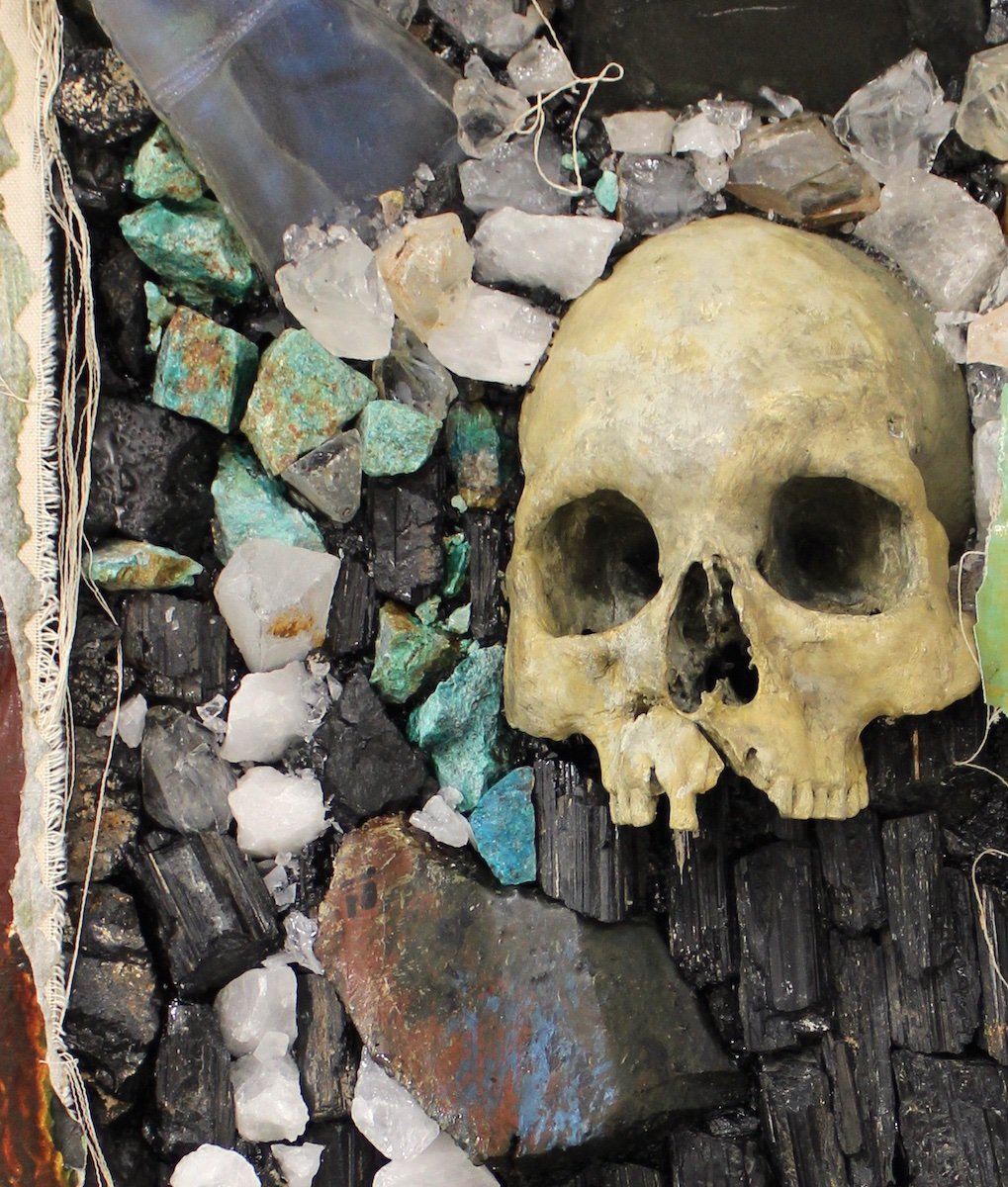
Detail
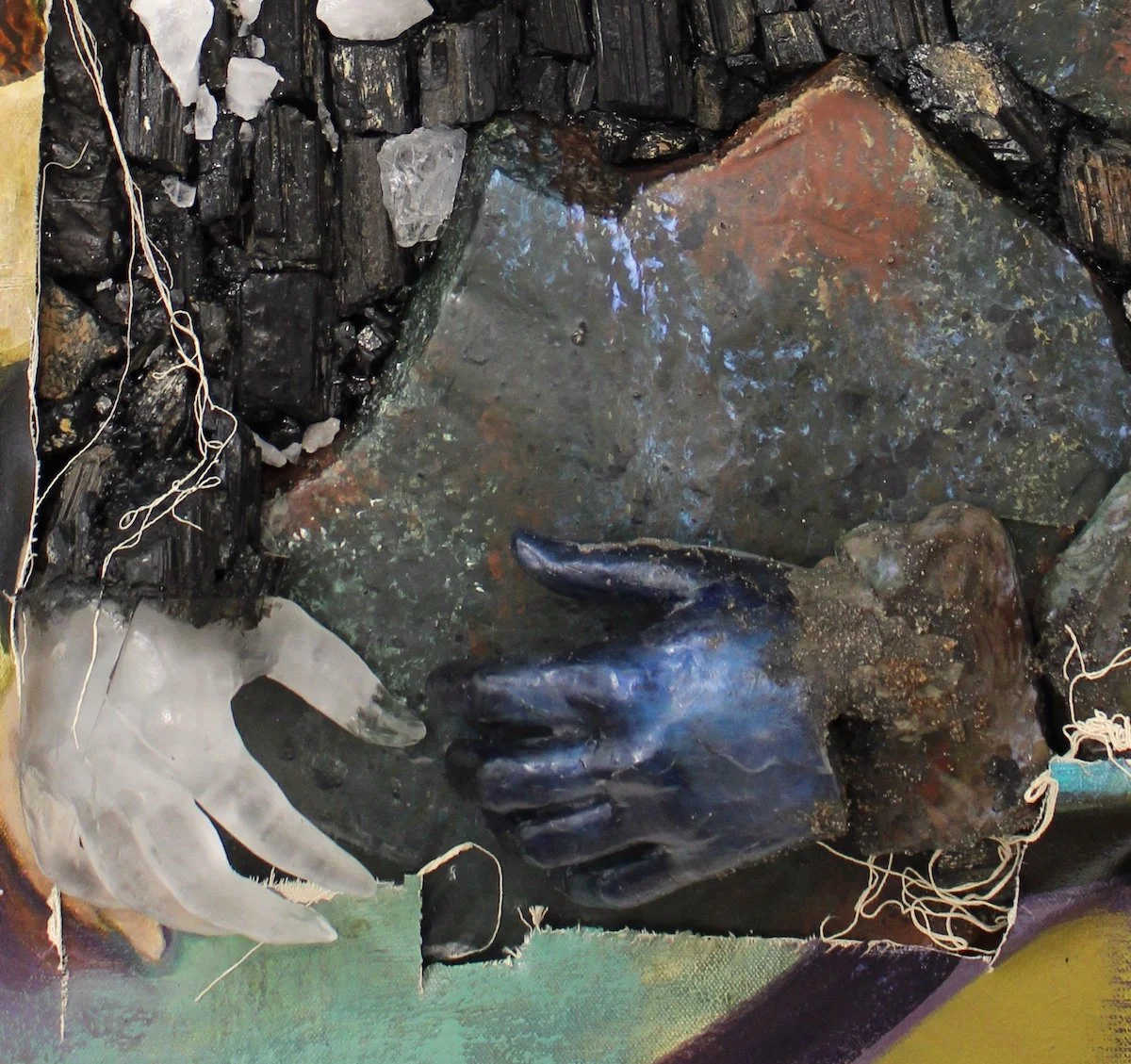
Detail