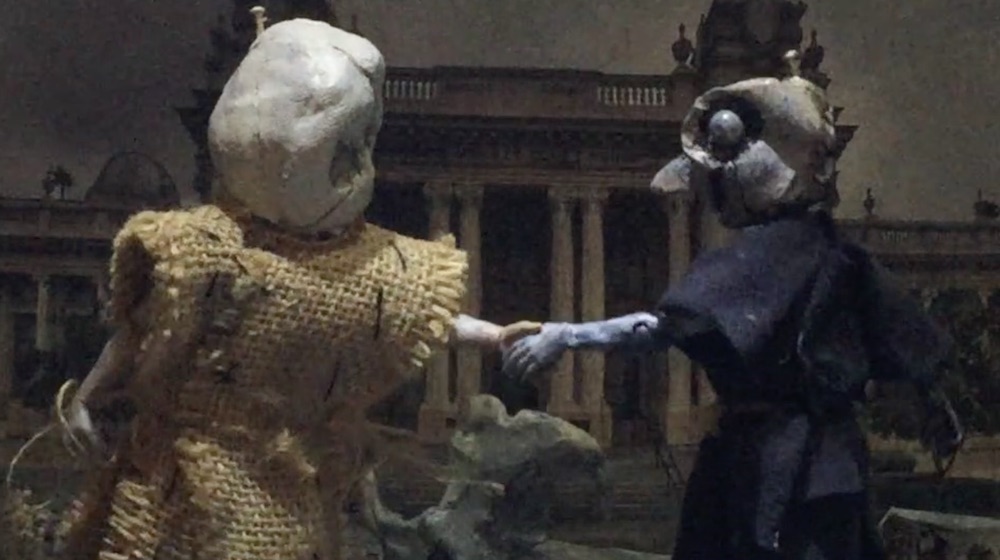
1. Resourcefulness with materials is key! When working in a small studio on a small budget with little or zero help, things come up: how to position a light and move it just so; how to suspend an object in mid flight; how to hinge a sculpture so that it moves and doesn't fall apart. It's fun and challenging to invent solutions, and because I keep a studio with a mixed assortment of hundreds of items, solutions can come easier, as I find myself using materials that I hadn't anticipated using. That leads to #2...
2. Here are some unanticipated essential materials. Maybe I just didn't think of them, but fortunately, I happened to have them in the studio: toothpicks, black cotton mesh, epoxy resin, flour, chopsticks, metal spoon, clear plastic acrylic sheeting, a few heavy books, a bookshelf (for maintaining movement of a light), black gloves, a round jar, aluminum foil, and a rubber ball. (By the way, some materials that I anticipated using and proved to be essential: hockey tape, painter's tape, electrical tape, canvas, assortment of wood, assortment of fasteners, steel wire, latex gloves, acrylic paint, self-hardening clay, matte gel, plasticine, cardboard, paper, needle and thread, hardware cloth, strings, clamps, and fishing line.)
3. Laziness is your worst enemy. This speaks for itself but always comes up when there are choices to make. Sometimes it can be just a little thing that makes a big impact. This applies to painting too, and maybe all forms of art. (And law.) Embrace the tedium and be patient. Don't let laziness cause you to settle. If some extra effort will result in better work, do it!